
Translate with Meaning
Decoding context and culture in every word.
An Accurate Online Language Translator Tool for Clear and Reliable Communication
Introduction
Language connects people, ideas, and opportunities across borders. In education, business, travel, and digital content creation, the ability to understand and be understood in multiple languages has become a basic requirement rather than a luxury. As communication increasingly happens online, the demand for reliable and easy-to-use translation solutions continues to grow.
An advanced language translator tool helps users overcome language barriers by providing fast, readable, and meaningful translations. Unlike older solutions that relied on rigid word replacement, modern online translation tools focus on clarity, flow, and real usage. Their primary purpose is to help users communicate accurately without changing the original intent of the message.
This article explains how TranslateSnap works, what features matter most in a reliable language translator tool, and how different users can benefit from using TranslateSnap for accurate online translation. While cultural awareness is discussed as one component, the main focus remains on overall translation quality, reliability, and practical value.
What Is an Online Language Translator Tool?
TranslateSnap is an online language translator tool designed to convert text from one language into another with a strong focus on accuracy, clarity, and real-world usability. These tools are designed to support everyday communication as well as professional and academic needs. Users can translate short phrases, full documents, emails, or conversational text without installing specialized software.
Modern translators go beyond basic dictionary lookups. They analyze sentence structure, grammar, and usage patterns to produce translations that feel natural and readable. This makes them suitable for a wide range of users, from students completing assignments to professionals handling cross-border communication.
How the Language Translator Tool Works
AI-Powered Translation Engine
At the core of this translator is an AI-powered system trained on large volumes of multilingual data. This allows it to recognize patterns in how languages are written and spoken. Instead of translating one word at a time, the system evaluates complete sentences to determine meaning.
Context Awareness
Context awareness is a key factor in accurate translation. Words often have multiple meanings, and the correct interpretation depends on how they are used. The translator examines surrounding text to choose the most appropriate meaning, reducing errors and awkward phrasing.
Continuous Improvement
Language is constantly evolving. New terms, expressions, and usage patterns appear regularly. A high-quality translation tool improves over time by incorporating updated language data, helping it remain accurate and relevant.
Accuracy in Translation
Accuracy is the most important expectation users have from a translation tool. An accurate translation conveys the same message as the original text without adding, removing, or altering meaning.
TranslateSnap focuses on:
- Correct grammar and sentence structure
- Proper word selection based on context
- Consistent terminology, especially in longer texts
For professional and academic users, this level of accuracy reduces the need for extensive manual editing after translation.
Understanding Meaning Beyond Literal Words
While literal translation can work for very simple phrases, real communication often requires deeper understanding. Some expressions do not translate directly, and sentence structure varies widely between languages.
This tool prioritizes meaning over direct word replacement. It restructures sentences when necessary so that the translated version reads naturally in the target language. This approach improves clarity and helps the message feel authentic rather than mechanical.
Cultural and Contextual Awareness
Cultural understanding plays a supporting role in translation quality. The tool does not only translate vocabulary but also considers tone and common usage where relevant.
For example:
- Idiomatic expressions are translated into equivalent phrases instead of literal wording
- Formal and informal language differences are respected when context is clear
- Regional language variations are handled to avoid confusion
This awareness helps prevent misunderstandings, especially in professional communication, without making cultural adaptation the primary focus of the tool.
Global Translation Trends and Real-World Language Usage
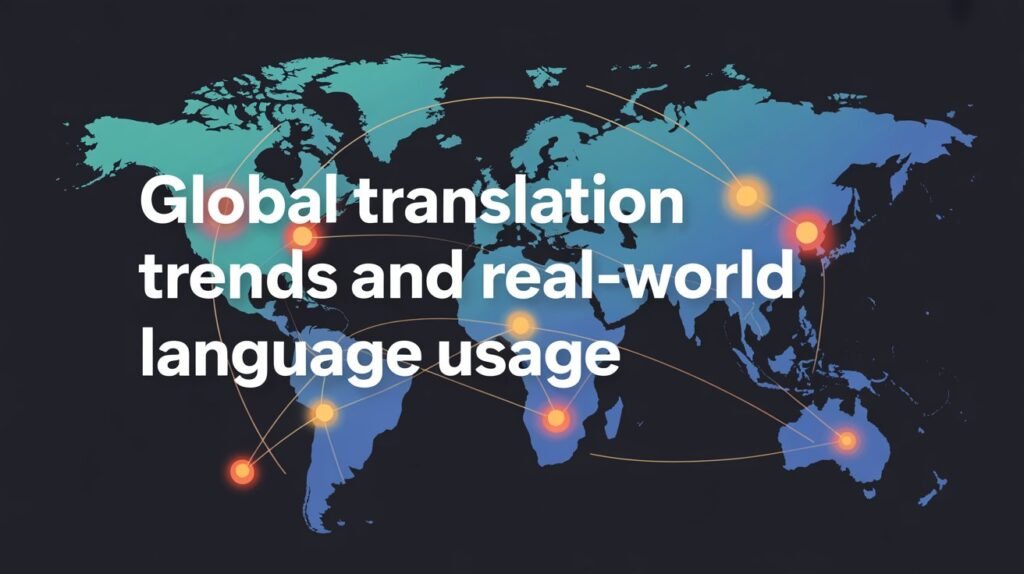
Language translation is no longer a niche requirement; it has become a daily necessity for millions of people worldwide. As digital communication expands, the demand for fast and accurate translation continues to rise across industries and regions.
Most Translated Languages Worldwide
Certain languages dominate global translation demand due to population size, international business, education, and online content creation. English remains the most frequently translated language, both as a source and a target language. It is commonly translated into Spanish, French, German, Portuguese, Arabic, Hindi, and Chinese.
Other highly translated languages include Spanish and French, which are widely used across multiple continents, as well as Chinese, Arabic, and Hindi due to their large native speaker bases. These languages often appear in education, trade, tourism, and digital services, making reliable translation especially important.
Why These Languages Are Translated So Often
Several factors drive translation demand:
- International business and outsourcing
- Global education and research
- Travel, migration, and tourism
- Online content, e-commerce, and social media
As more services move online, language accessibility has become a key requirement rather than an optional feature.
Common Challenges People Face With Translation
Despite improvements in technology, users still encounter challenges when translating content:
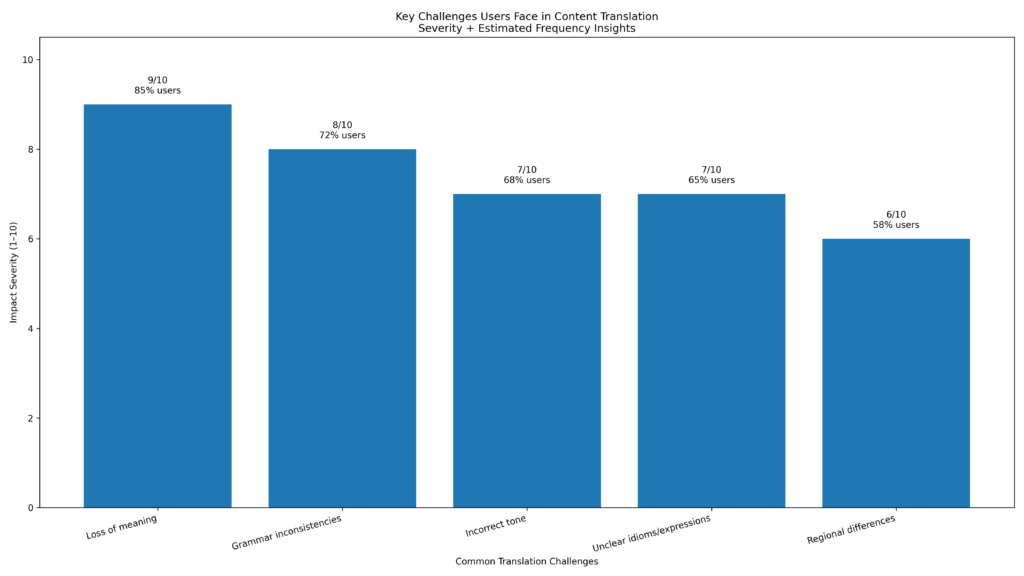
- Loss of meaning: Literal translations can miss the intent of the original message
- Incorrect tone: Formal and informal language may not be handled properly
- Grammar inconsistencies: Long texts may lose coherence
- Unclear idioms or expressions: Phrases may not make sense when translated directly
- Regional differences: The same language can vary significantly across regions
Modern translation tools aim to reduce these issues by focusing on context, structure, and real usage rather than direct word substitution.
How TranslateSnap Addresses These Challenges
TranslateSnap is designed to handle high-demand languages efficiently while maintaining clarity and consistency. By focusing on sentence-level understanding and adaptable language models, it helps users translate common global languages more reliably and with fewer misunderstandings.
User Interface and Ease of Use
A translation tool must be easy to use to be effective. This platform is designed with simplicity and speed in mind.
Key interface benefits include:
- Clean and intuitive layout
- Fast translation results
- Support for short and long text inputs
Users can focus on their content rather than learning how to use the tool.
Supported Use Cases
Education and Learning
Students and educators use translation tools to understand foreign-language materials, research content, and learning resources. Accurate translation supports comprehension without oversimplifying complex ideas.
Business and Professional Communication
Clear communication is essential in business. This translator helps professionals write emails, reports, and messages that remain clear and appropriate across languages.
Travel and Everyday Communication
Travelers rely on online translation for directions, services, and basic interactions. A reliable translator improves confidence and reduces misunderstandings in daily situations.
Content Creation and Publishing
Writers, bloggers, and marketers often need to reach audiences in multiple languages. This tool supports content localization by maintaining readability and intent.
Comparison With Basic Translation Tools
Basic translation tools often rely on direct word substitution. While fast, this approach can result in incorrect meaning or unnatural phrasing.
TranslateSnap differs by:
- Focusing on sentence-level meaning
- Adjusting structure for readability
- Maintaining consistency across longer texts
The result is a more reliable translation experience for serious users.
Data Security and Reliability
Trust is essential when using any online service. A professional translation tool must handle user data responsibly.
This translator follows secure data-handling practices and avoids unnecessary storage of user content. Reliability is also reflected in consistent performance and stable output quality.
By aligning with EEAT principles, the tool demonstrates expertise through accuracy, trust through responsible design, and value through user-focused functionality.
Frequently Asked Questions (FAQs)
What is an online language translator tool?
An online language translator tool converts text from one language to another using automated systems. Modern tools focus on sentence structure, meaning, and readability rather than simple word replacement.
How accurate are modern translation tools?
Accuracy has improved significantly with AI-based systems. When text is clear and well-structured, modern translators can deliver highly reliable results for everyday, academic, and professional use.
Can translation tools be used for business communication?
Yes. Many professionals rely on translation tools for emails, reports, and documentation. Tools that prioritize context and consistency are especially suitable for business environments.
Does TranslateSnap work with long text?
TranslateSnap is designed to handle both short phrases and longer passages. It processes content at sentence level, helping maintain coherence across extended text.
How is TranslateSnap different from basic translators?
Unlike basic word-by-word tools, TranslateSnap focuses on meaning and structure. This results in translations that are clearer, more natural, and easier to understand.
Is TranslateSnap suitable for students and learners?
Students use TranslateSnap to understand foreign-language materials and complex texts. It supports learning by providing clear translations while preserving original meaning.
Is user data safe when using TranslateSnap?
TranslateSnap is built with user trust in mind and avoids unnecessary storage of user-submitted content, supporting secure and responsible usage.
Conclusion
A reliable online language translator tool has become an essential part of modern digital communication. TranslateSnap focuses on what matters most to users: accuracy, clarity, speed, and ease of use.
By combining AI-powered translation with context awareness and a clean interface, TranslateSnap supports a wide range of real-world needs—from education and professional communication to travel and content creation. While it accounts for tone and usage where appropriate, its primary strength lies in delivering translations that are readable, dependable, and practical.
For anyone looking to communicate across languages with confidence and efficiency, TranslateSnap offers a balanced, user-focused solution designed for long-term value and everyday reliability.